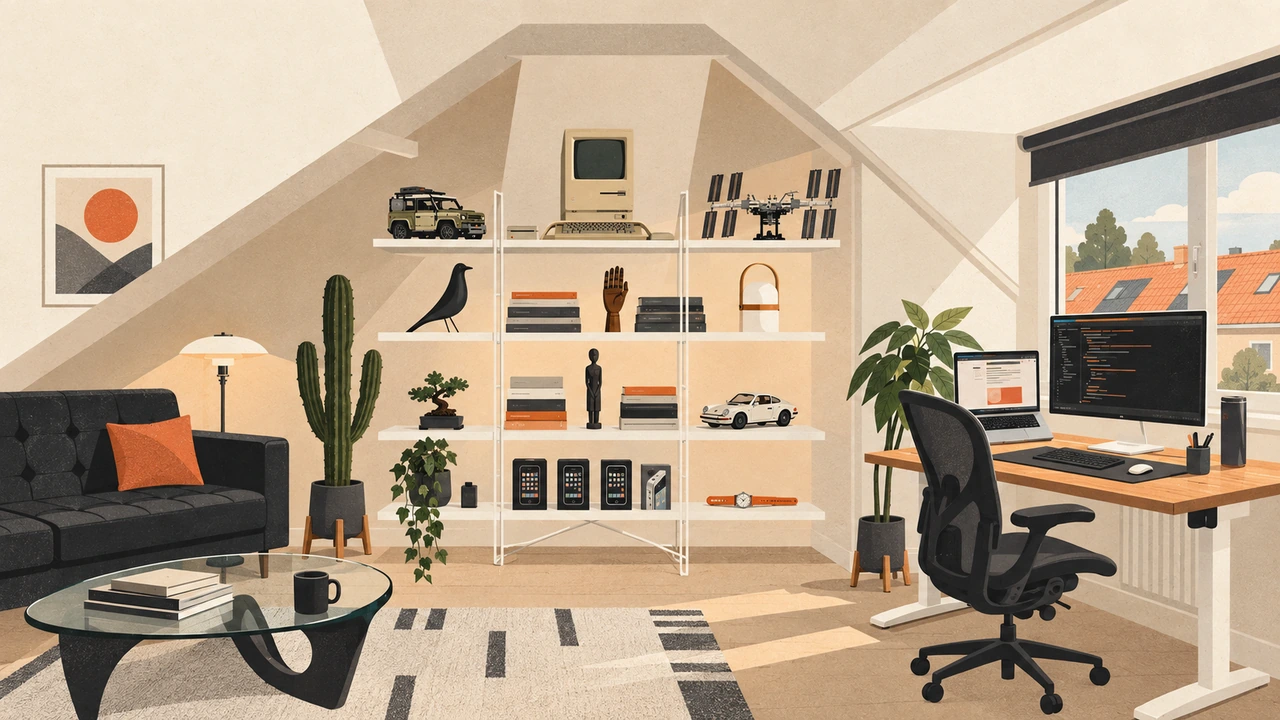
My office is probably quieter than people expect.
At first glance, it is just a clean attic room with a desk by the window, a shelf on the wall, and a sofa in the corner. There is nothing loud about it. No RGB lights, no wall-sized setup photos, no five-monitor command center. That part is intentional. I like working in a calm space.
But the room is not empty, and it is definitely not generic.
If you spend a minute looking around, you start to notice what really makes the room mine: an old Macintosh on the shelf, a few early iPhone boxes, LEGO models, software books, and small objects that have somehow survived every cleanup phase. Some people decorate a workspace with whatever looks nice. I have always ended up keeping the things that still mean something.
Most days, this is simply where I work. I sit at the desk, open my laptop, and spend hours with code, logs, messages, and the usual rhythm of software development. The desk itself is deliberately simple. A large surface, one external monitor, a comfortable chair, a few things I use every day, and not much else. I have learned that I work better when the part of the room directly in front of me stays quiet.
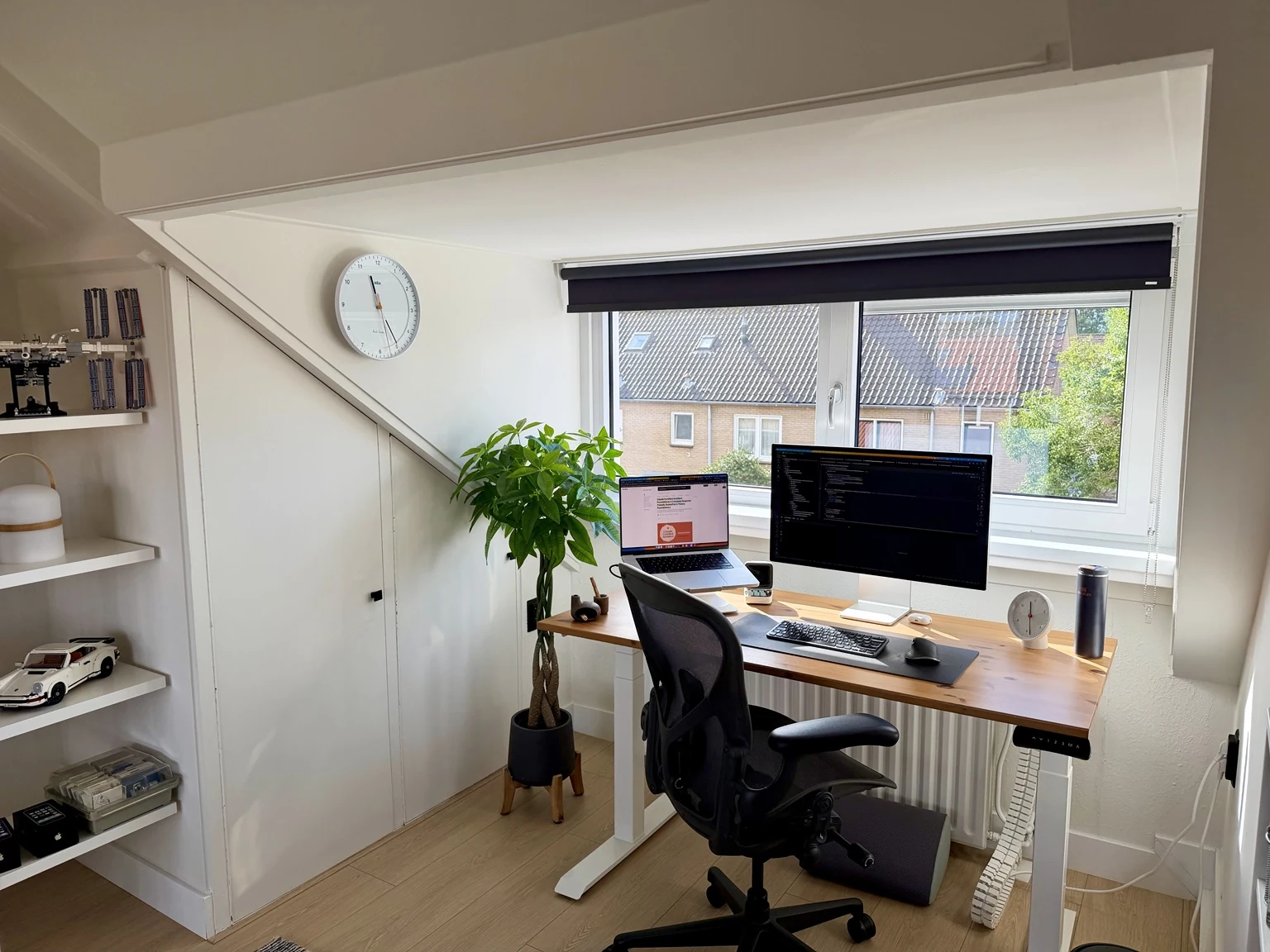
That simplicity at the desk also makes the rest of the room more meaningful. Behind me, the shelf tells a different story.
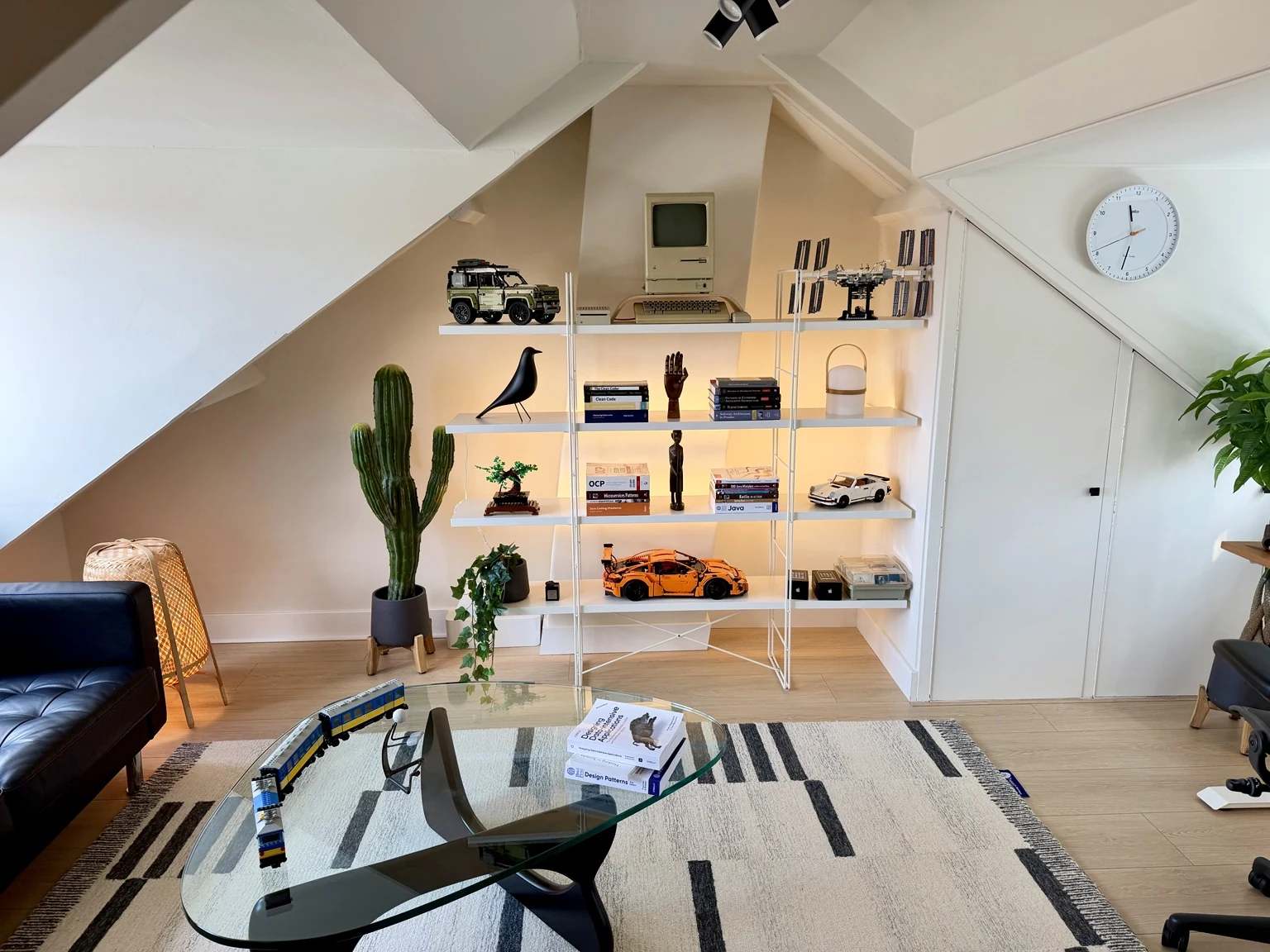
The shelf is where the room stops being just a workspace.
There is an old compact Macintosh sitting near the top, right in the middle. It immediately changes the feeling of the room. It reminds people that this space is not only about what I do now, but also about what first pulled me into technology in the first place. Around it are books, a few LEGO models, small design objects, and some personal pieces that I have kept over time. None of them are there by accident.
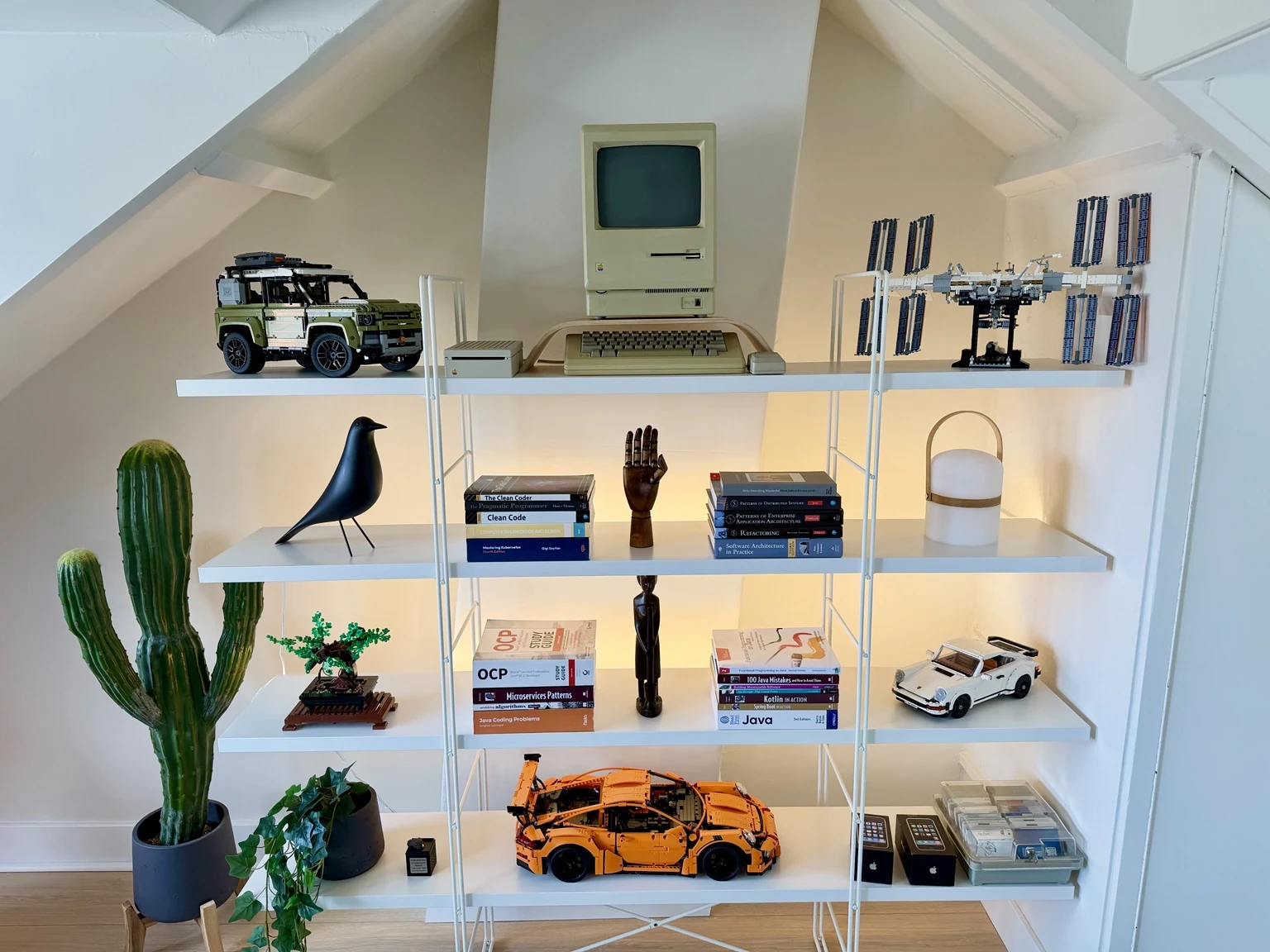
The old Macs are probably the most personal part of the room.
I do not only collect them. I also buy, repair, restore, and sometimes sell them again. Over time, that became a small side project of its own. I started OldByte as a way to give some of these machines a second life and pass them on to people who appreciate them. Restoring an old Macintosh is slow in a very satisfying way. It asks for patience. You have to open the machine, understand what is wrong, clean what needs to be cleaned, replace what needs to be replaced, and then test it again. When one of them finally comes back to life, it feels very different from finishing a task in software. It is physical, visible, and immediate.
There is also something familiar about it as an engineer. Troubleshooting a forty-year-old computer is not the same as debugging a service in production, of course, but the mindset overlaps more than people think. You observe symptoms, form a hypothesis, rule things out, try again, and eventually narrow the problem down. The tools are different, but the satisfaction is strangely similar.
That is probably why the old Macs belong in the same room as my everyday work. During the day, most of what I build exists somewhere far away in a data center. APIs, queues, background jobs, and database records are useful, but abstract. A restored Macintosh is the opposite. It sits in front of you. You can hear it, open it, repair it, and see the result with your own eyes.
The same idea explains why I kept some of the early iPhone boxes.
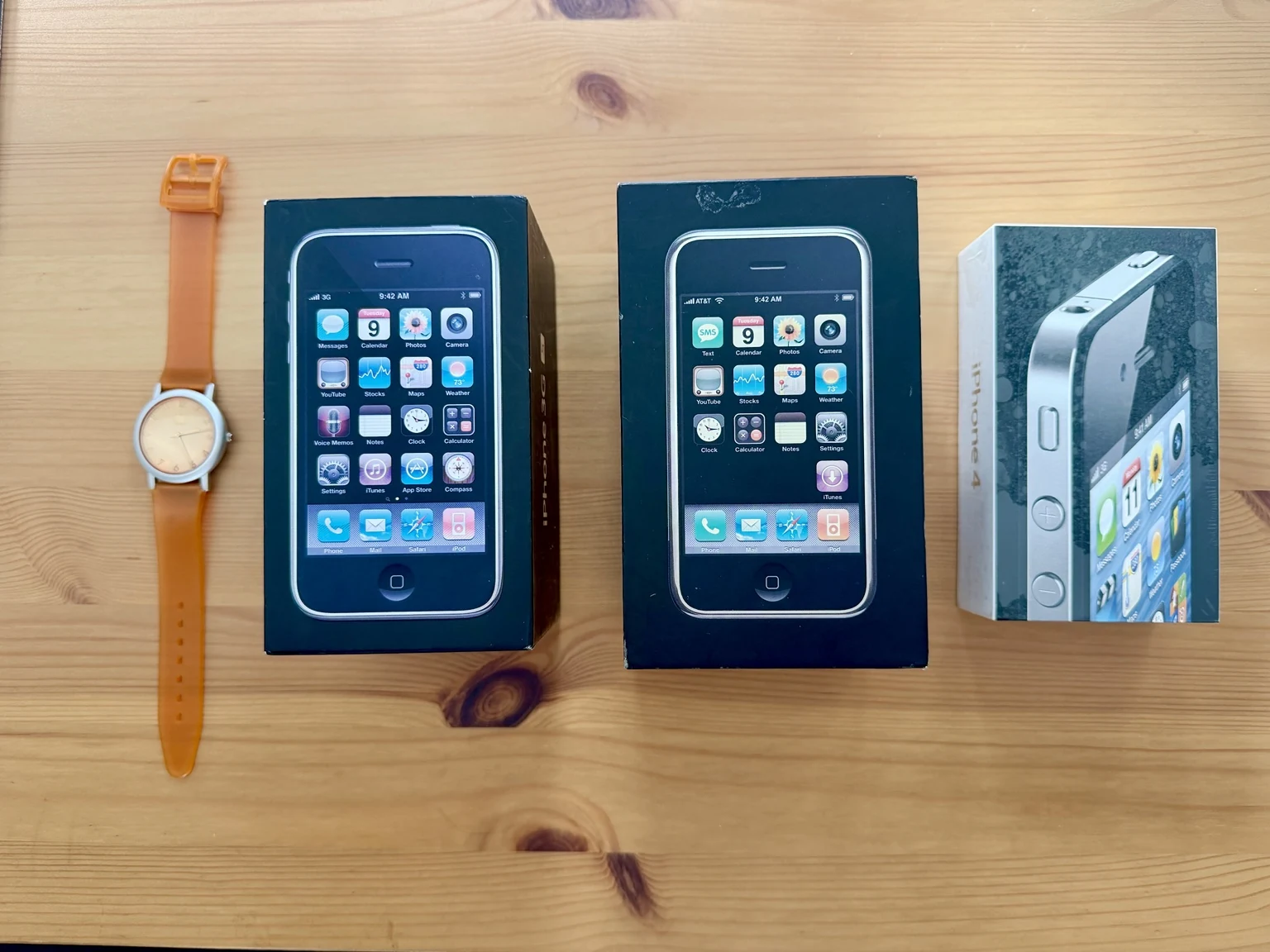
They are small objects, but they hold a lot of memory. The first generations of the iPhone changed how technology felt to ordinary users. Today, many of the things they introduced seem completely normal. At the time, they felt new. Keeping those boxes is not really about packaging. It is about holding on to a moment when technology still felt full of surprise.
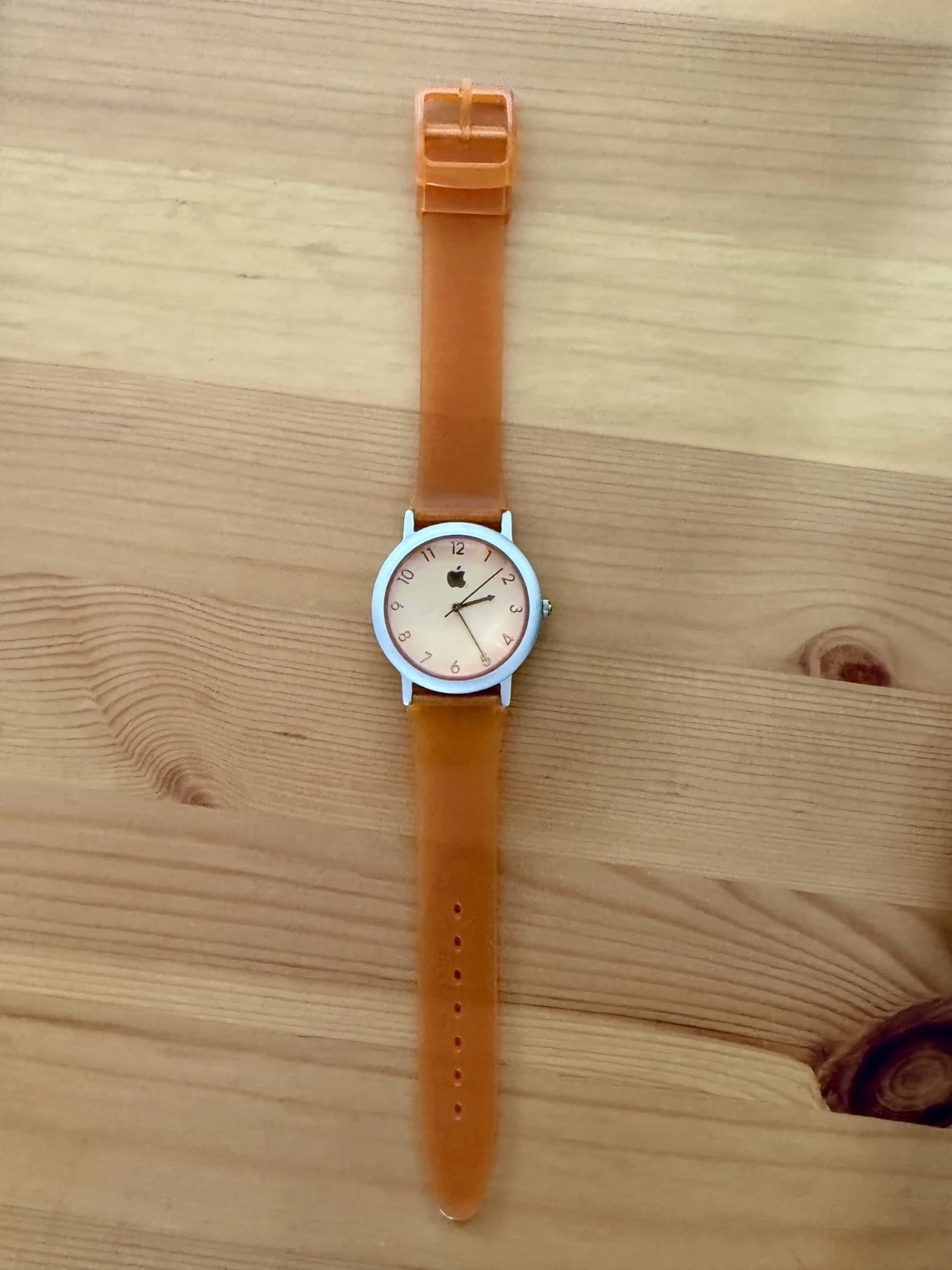
The orange watch next to them is another example of the kind of thing that survives in this room. It is simple, a little playful, and it adds a small human detail to a space that could otherwise become too serious. I like rooms that have a bit of character without turning into storage.
LEGO also belongs here for a similar reason.
Some of the models in the room are there because I like how they look, but that is not the main reason. I spend most of my professional life building things that are invisible. Even when a system is working well, you cannot really put it on a shelf. You cannot walk past it and see what changed. A LEGO model is different. It starts as a pile of small parts and ends as something you can actually touch. Maybe that is why I have always found it relaxing.
The books on the shelf are a quieter version of the same story. Some of them are books I still return to. Others are books I mostly keep because they represent a different period of my career. They remind me of what I was trying to learn at the time, what kind of developer I was becoming, and how my thinking changed. I like that the room keeps traces of older versions of myself without turning into a museum.
Not every part of the room is about work.
On the other side is a small sitting area with a sofa and a coffee table. It is where I sometimes step away from the desk, but more importantly, it is where my wife and I sit with a coffee and talk. I wanted the room to have a place for that too. A home office can easily become a room you only enter to work, and I never wanted this one to feel that way.
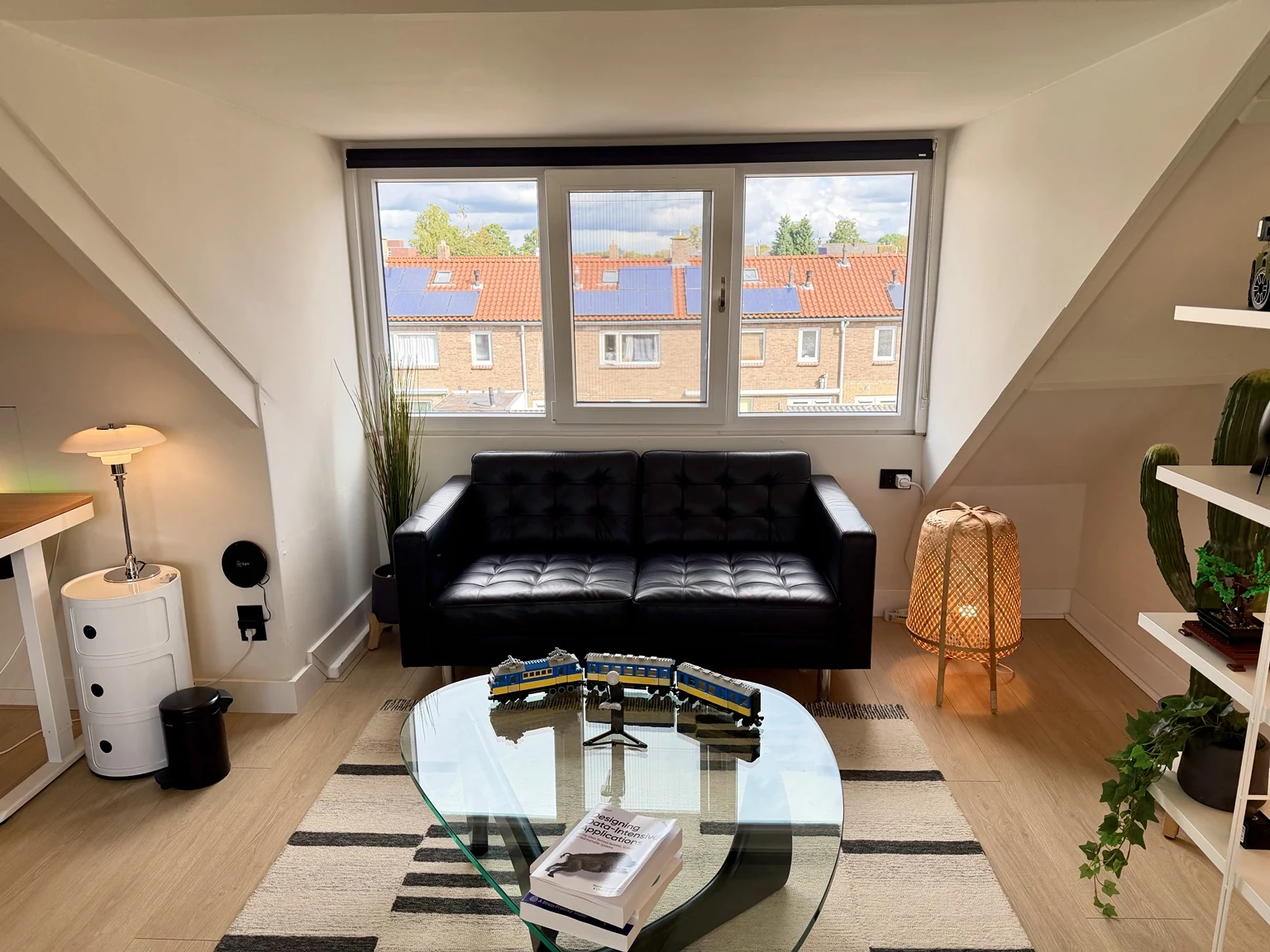
Sometimes the best use of the room is simply closing the laptop and sitting there for a while.
That balance matters to me.
I like minimal spaces, but not empty ones. For me, minimalism has never meant removing everything until the room becomes anonymous. It means being selective. It means leaving enough empty space for focus, while giving a few meaningful things room to stay. That is why the desk is simple, but the shelf is not sterile. That is why there is open floor space, but also an old Macintosh a few steps away. That is why the room can hold a quiet working day and a small restoration project without feeling crowded.
In the end, this room is more than a workspace.
It is where I do my daily work, but it is also where my technology history lives in small pieces. It holds the machines that first made computing feel interesting, the objects that stayed with me, the books that shaped parts of my career, and the projects that still pull me away from a screen and into something more hands-on.
I like that contrast.
Modern software work can be fast, abstract, and temporary. A restored Macintosh is slow, tangible, and stubbornly real. Somehow, both belong in the same room.